
Understanding Babylonstoren
Authenticity is a construction of intent

You are sitting at your table at Babel restaurant, enjoying an extraordinary meal made almost entirely from produce grown a few metres away. A young woman in farm clothes approaches with a wooden platter. Fresh honeycomb, oozing, with ripe figs alongside. She tells you she has just picked them from the garden. In season. Pollinated by the bees you passed on your way in.
She offers you a taste, on the house.
You feel it. The magic of the place. The sense that you are connected to something real, something unhurried, something built on genuine conviction. Your imagination runs ahead of you. Her wandering back through the idyllic garden, the figs still warm from the sun and the bees diligently following.
Then, out of the corner of your eye, she stops at the next table. Same wooden platter. Same story.


The bees, of course, don’t know they’re performing. They leave the hive each morning and do their work. Pollinating, producing, returning in the service of something far larger than themselves. It is diligent, it is beautiful, and it is entirely by design.
So is everything else here.
Babylonstoren is a farm in the Cape Winelands that has been operating since 1692. It is also, a creation. Assembled with extraordinary care by a former editor of Elle Decoration South Africa, and backed by one of the most successful media entrepreneurs on the continent. Every rill, every balancing rock hiding the sprinklers, every story told tableside is intentional.
The Operating System
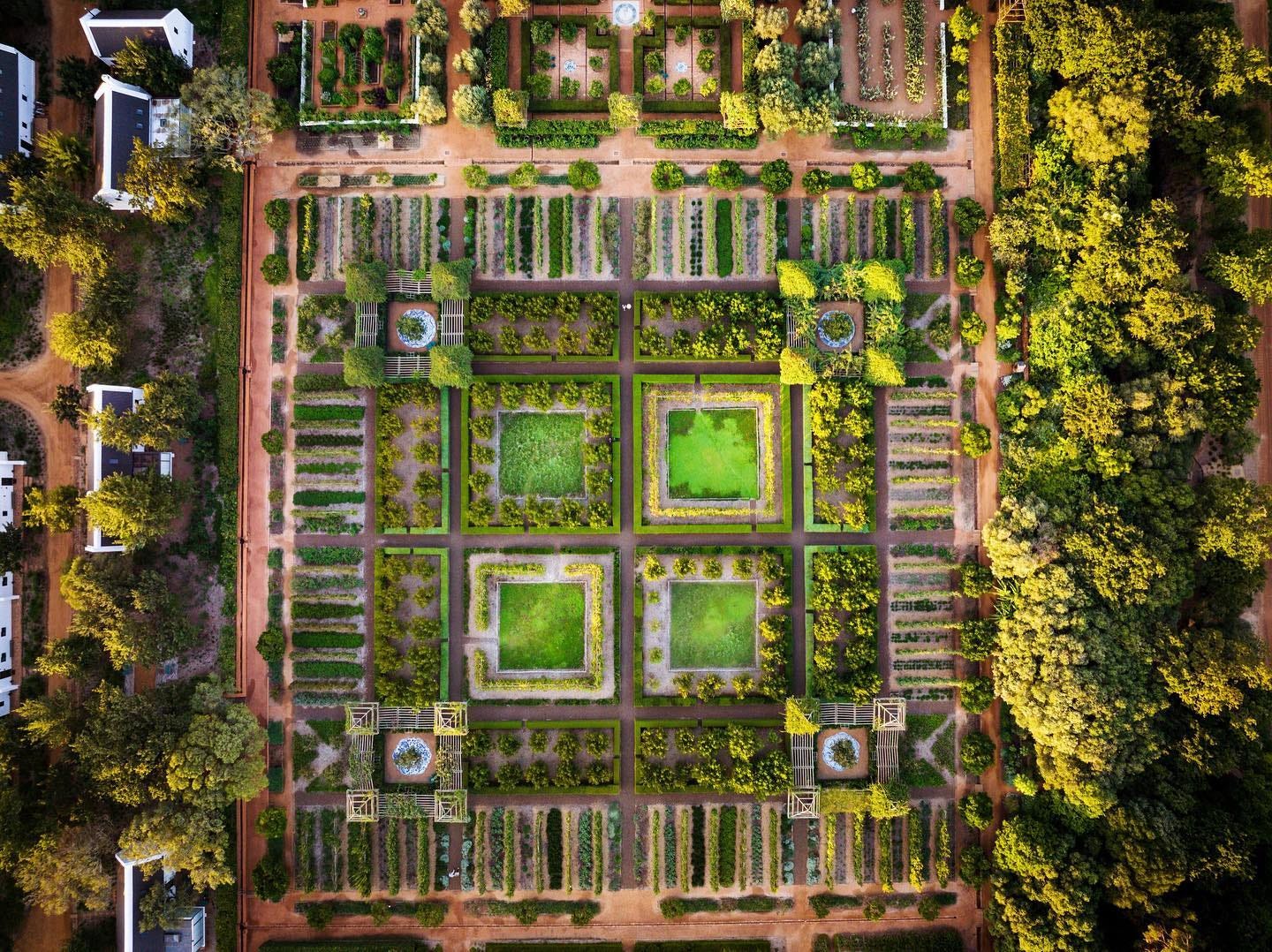
The formal garden covers five hectares and contains three hundred varieties of edible and medicinal plants, organised into fifteen clusters by French architect Patrice Taravella. A man who had already reconstructed a medieval cloistered garden on the site of a 12th-century monastery in the Loire Valley before he was commissioned here. His brief was classical geometry. Axis, order, movement. A garden that holds you and calms you down.
It does exactly that.
Water moves through it by gravity, along rills, into ponds planted with lotus and waterblommetjies. There are rose towers, a chamomile lawn, a prickly pear maze, thousands of clivia lilies that detonate in colour each spring. The ducks leave each morning to eat the slugs from the vineyards, guided by a keeper, returned by afternoon. The restaurants cook what the garden produces that day. The spa uses botanicals grown fifty metres from the treatment rooms. The wine comes from grapes grown around the tasting room.
Every aspect of Babylonstoren, as the farm itself will tell you, is led by the ever-changing tapestry and botanical diversity of the garden.
The garden is not decoration. It is the operating system. Everything else, the hotel, the restaurants, the spa, the shop, the workshops, is output.
It is a beautiful idea. It is also a very good business model.
Following the Bees


Karen Roos and her husband Koos Bekker purchased Babylonstoren in 2007. Bekker co-founded M-Net, launched DStv, and built Naspers into a global technology company. His net worth sits at approximately $3.4 billion.
This is the capital behind the chamomile lawn. This is not a farm that became something extraordinary through decades of quiet stewardship. It is a vision, fully funded from the beginning, executed by a woman with an exceptional eye and the resources to realise it without compromise.
Taravella was the right man for a very specific brief. The wine program did not evolve slowly from old vines; it was built deliberately, with a state-of-the-art cellar and a winemaking team assembled to produce results. The spa, the retail experience, the workshop program, the produce subscriptions. Each one is the best possible version of itself.
When the formula worked, they exported it. The Newt in Somerset. A historic Tuscan estate. A Dutch polder farm. A beach retreat accessible only to guests who have already stayed at one of the other properties. What began as a farm in the Franschhoek Valley is now a portfolio. A coherent, globally expanding idea about how land, food, design, and hospitality can be woven into a single experience.


Understanding Timelessness
Here is the uncomfortable truth about authenticity: it has always been a construction of intent.
The great country houses of England were built by men with inherited wealth and acquired land. The grand hotels of the Riviera were designed to manufacture a feeling of effortless elegance. The “timeless” brands we revere most (the ones built on “heritage” and “craft”) were, at some point, also just very good ideas with money behind them.
Babylonstoren will endure. The garden is real. The wine compounds slowly and gets better. The architecture is honest. The ducks genuinely eat the slugs. The honeycomb at your table genuinely came from the hives you walked past on the way in.
What was manufactured was not the place. It was the conditions under which the place could exist without compromise. Most farms that want to be Babylonstoren simply cannot afford to be. That is the quiet advantage that runs beneath everything here. A total absence of the limitations. It was imagined completely, funded completely, and built completely. The seams don’t show because they were never allowed to.
You can know all of this and still feel the magic. In fact, knowing it might make you respect the place more. Not as a discovery, but as an achievement. Something built to last, in a world full of things built to impress.
The young woman will bring honeycomb to every table. The bees will keep working. The garden will keep producing.
Very well said: "What was manufactured was not the place. It was the conditions under which the place could exist without compromise"